Getting Started With Your Trezor Hardware Wallet
In today’s digital world, protecting your cryptocurrency is more important than ever. Unlike traditional financial assets, cryptocurrencies rely on private keys for security, and losing access to these keys can mean losing your funds permanently. A Trezor hardware wallet offers one of the safest ways to store your digital assets, providing peace of mind through offline key storage and robust security measures. This guide will take you through every step of getting started with your Trezor wallet, from unboxing to securely managing your crypto portfolio.
1. Why Choose a Trezor Hardware Wallet?
Trezor hardware wallets are widely recognized for their security, usability, and versatility. They keep your private keys offline, away from the vulnerabilities of internet-connected devices. Unlike software wallets, which are more susceptible to malware, phishing, or hacking, a Trezor wallet ensures that signing transactions happens securely on the device itself.
Some of the key benefits include:
Offline Storage of Private Keys: Your private keys never leave the device.
Easy Recovery: The recovery seed allows you to restore your wallet on any Trezor or compatible wallet.
Wide Cryptocurrency Support: Trezor supports thousands of cryptocurrencies and tokens.
Integration with Trezor Suite: A secure desktop and web application to manage, send, receive, and exchange your assets.
Open Source: The firmware and software are transparent, allowing the community to audit and verify security.
Trezor is ideal for both beginners and experienced users who want a secure and intuitive way to manage their crypto.
2. Unboxing Your Trezor Wallet
When you first receive your Trezor wallet, ensure the package is sealed and has not been tampered with. Inside the box, you should find:
The Trezor hardware wallet device (Model T or Model One)
USB cable
Recovery seed card(s)
Instruction and quick-start guide
Always purchase Trezor devices directly from the official website or authorized resellers to avoid counterfeit devices. Never use a device with a preconfigured recovery seed.
3. Initial Device Setup
Step 1: Connect Your Device
Use the included USB cable to connect your Trezor wallet to your computer or mobile device. Your device should power on automatically. Depending on the model, you may see a touchscreen (Trezor Model T) or button navigation (Trezor One).
Step 2: Install Trezor Suite
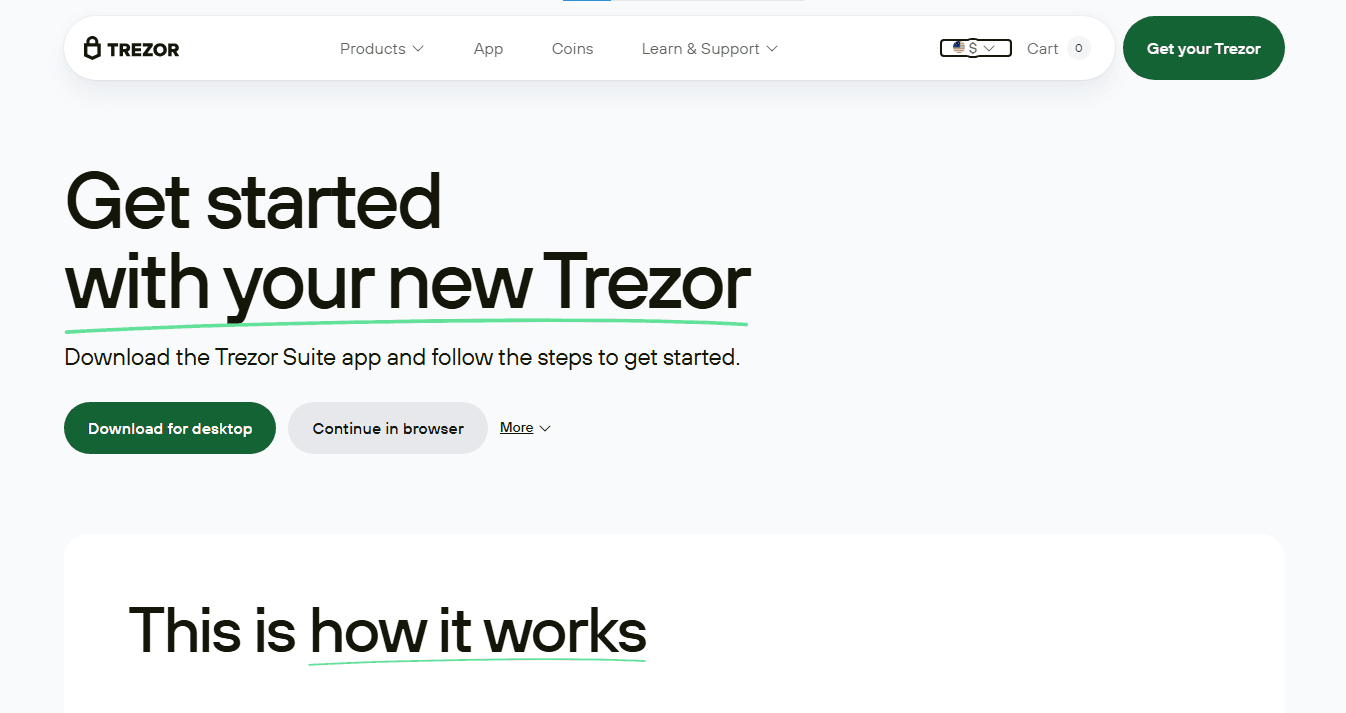
Trezor Suite is the official application to manage your cryptocurrency securely. Download Trezor Suite from the official website to ensure you avoid phishing attacks. The Suite is available for desktop and mobile platforms, providing a secure environment for managing your funds.
Step 3: Initialize as a New Device
Select “Create a new wallet” during setup. The Trezor device will generate a brand-new private key. This process ensures your wallet is fully secure and has never been exposed to any network or third party.
Step 4: Set a PIN
Your device will prompt you to set a PIN. This PIN protects the wallet if the device is lost or stolen. Choose a unique combination that is hard to guess, but memorable enough for you to recall.
4. Secure Your Recovery Seed
After setting your PIN, the device will generate a recovery seed—a series of 12, 18, or 24 words depending on the model and configuration. This recovery seed is crucial because it allows you to restore your wallet in case the device is lost, stolen, or damaged.
Best practices for your recovery seed:
Write it down on the recovery card provided.
Store it offline in a secure location.
Never take a photo or store it digitally.
Consider multiple secure backups in separate safe places.
The recovery seed is your ultimate backup; anyone with access to it can control your funds.
5. Setting Up Trezor Suite
Trezor Suite is the companion software that allows you to fully interact with your Trezor wallet.
Step 1: Pair Your Device
Launch Trezor Suite, and connect your Trezor wallet. The Suite will detect your device and verify its authenticity. This step is important to ensure your device has not been tampered with.
Step 2: Create Accounts
Within Trezor Suite, you can create individual accounts for each supported cryptocurrency. For example, you can create accounts for Bitcoin, Ethereum, Solana, and more. Each account is secured by the Trezor hardware wallet.
Step 3: Manage Your Portfolio
Trezor Suite allows you to view your portfolio, track balances, monitor transactions, and manage multiple accounts. It also offers features like exchange integration and portfolio analytics to give you a complete overview of your digital assets.
6. Receiving Cryptocurrency
To receive cryptocurrency safely:
Select the account for the asset you wish to receive.
Generate a receiving address in Trezor Suite.
Verify the address on your device screen to ensure it matches what’s displayed in the Suite.
Share the address with the sender or exchange.
Always confirm the address directly on your Trezor device to protect against malware that could modify addresses on your computer screen.
7. Sending Cryptocurrency
When sending crypto from your Trezor wallet:
Open the account you want to send from.
Enter the recipient’s address and the amount.
Verify the transaction details on your device.
Approve the transaction physically on the hardware wallet.
This extra verification step ensures that malware or compromised software cannot manipulate your transactions.
8. Advanced Features: Staking, Swapping, and Passphrase Protection
Staking
Trezor supports staking for certain cryptocurrencies. Staking allows you to earn rewards while participating in network validation. All staking operations are confirmed directly on the device to maintain security.
Swapping
Using Trezor Suite, you can swap assets between supported cryptocurrencies without exposing your private keys to online exchanges.
Passphrase Protection
For added security, you can enable a passphrase on top of your recovery seed. This acts as a “25th word,” creating a separate wallet that is invisible without the passphrase. Use this feature to protect against physical theft or added privacy concerns.
9. Security Best Practices
Even with a Trezor hardware wallet, maintaining strong security habits is essential:
Never share your recovery seed or passphrase.
Buy only from official sources.
Regularly update firmware via Trezor Suite.
Verify all addresses on your device screen before sending transactions.
Keep backups of your recovery seed in secure locations.
Avoid entering your recovery seed into any device or software outside Trezor Suite. Trezor will never ask for your seed online.
10. What If Your Trezor Is Lost or Damaged?
If your Trezor device is lost, stolen, or damaged, your funds are not lost. Using your recovery seed, you can restore all accounts and assets on a new Trezor device or a compatible hardware wallet. This is why securely storing your recovery seed is critical—more important than the device itself.
11. FAQs
Does Trezor Control My Funds?
No. Your private keys remain on your device. Trezor provides the hardware and software for secure management but does not have access to your funds.
Can I Use Trezor With Third-Party Wallets?
Yes. Trezor is compatible with many popular wallets like MetaMask, Electrum, and MyEtherWallet, depending on the blockchain.
Is the Recovery Seed Standard?
Yes. Trezor uses industry-standard BIP39 recovery seeds, making your wallet recoverable on compatible devices and wallets.
12. Tips for Long-Term Security
Regularly check that your firmware and Trezor Suite are up to date.
Avoid sharing private information online.
Keep multiple backups of your recovery seed in secure locations.
Use passphrases for additional layers of security.
Stay informed about crypto security practices and emerging threats.
Conclusion
Starting with a Trezor hardware wallet is one of the most secure ways to manage your cryptocurrency. By following the steps outlined in this guide, you ensure that your private keys remain safe, your funds are recoverable, and your transactions are verified. Whether you are a beginner entering the world of crypto or an experienced trader looking for enhanced security, Trezor offers a reliable, transparent, and user-friendly solution.
Begin your journey by unboxing your Trezor, setting up your PIN, securing your recovery seed, and exploring Trezor Suite. With these tools, you can confidently store, send, receive, and manage your digital assets while maintaining full control over your financial security.